Main Cast

Deanna Durbin
Jackie Lamont / Abigail Martin

Gene Kelly
Robert Manette

Richard Whorf
Simon Fenimore

Dean Harens
Charles Mason

Gladys George
Valerie de Merode

Gale Sondergaard
Mrs. Manette

David Bruce
Gerald Tyler
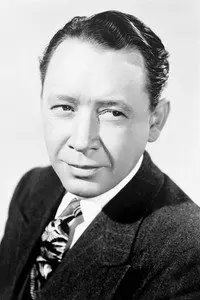
Eddie Acuff
Steve (uncredited)
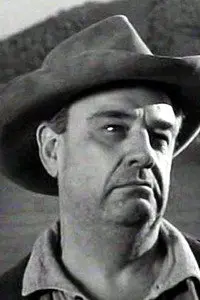
Fred Aldrich
Bartender (uncredited)
Frank Austin
Jury Member (uncredited)
Trailer
User Reviews
John Chard
Christmas Holiday (1944) Vacationing with the troubled and the forlorn. Christmas Holiday is directed by Robert Siodmak and adapted to screenplay by Herman J. Mankiewicz from the novel of the same name written by W. Somerset Maugham. It stars Deanna Durbin, Gene Kelly, Richard Whorf, Dean Harens, Gale Sondergaard and Gladys George. Music is by Hans J. Salter and cinematography by Elwood Bredell. The title is a bit of a bum steer, the presence of Durbin and Kelly a splendid slice of red herring casting, and the written notices on the internet announce that the source material was watered down for this filmic adaptation. All of these instances mark Siodmak’s film out as a fascinating oddity, and certainly of high interest to film noir lovers. Plot essentially has Durbin telling Harens in flashback how her life crumbled around her when she married Kelly. She thought he was a wealthy gent full of charm and love, but soon she comes to realise that he’s a rascal with underlying issues, not helped by his mother, a witch like Sondergaard. Had Siodmak been able to go full tilt with the characterisations here, we would have most likely been privy to one of his finest dark noirs, he was after all one of the great purveyors of such devilish delights. Yet even though there’s a frustration that some of the bolder elements of Maugham’s prose are not overtly evident, there’s still a dark heart beating away, with suggestions of prostitution, incest and homosexuality dangling in the air, baiting those who in the classic eras adhered to censorship. Siodmak and Bredell don’t over saturate via noir filters, but as the story moves between seedy New Orleans clubs and Gothic churches, the sense of everything being out of sorts is amplified by smoke and lighting techniques. The pace is very up and down, and not all the director’s scene constructions help the narrative be all it can be, but his knack for emphasising certain thematics via tone and responses from his actors is very much evident here. Thematically it’s all very glum, America gone bad, love and romance are mere illusions. From the opening sequence as Harens – having served in the war for his country – receives a “Dear John” letter, to the striking denouement, this is anti-love and a portrait of a self loathing country readily able to accept corruption and the dark bents of human nature. The strong performances by the leads, supplemented by the wonderful Sondergaard (you know things are going to be creepy when she’s around), and the Oscar nominated score by Salter round out the many strengths of Christmas Holiday. Not one to cheer you up at the yuletide season, and far from perfect with its draggy mid-section, but this is hugely effective film noir and fans of such will get plenty of miserablist rewards from it. 7.5/10
CinemaSerf
Frank Loesser, Irving Berlin, Gene Kelly and a film called 'Christmas Holiday' does lead you to expect a decent doze of cheesy, breezy, snow-capped seasonal romance. Instead, we get something altogether different and I was pleasantly surprised. It all starts rather brutally as the loved-up 'Lt. Mason' (Dean Harens) is unceremoniously dumped by his fiancée on Christmas Eve, just as he is about to fly to San Francisco to propose. Despondent, he boards his plane only to have it diverted to New Orleans by a storm. Put up in an hotel for the night, he is befriended by a local journalist who in turn introduces him to 'Jackie/Abigail' (Deanna Durbin). He isn't interested in drink or anything else, really, but he does agree to accompany her to midnight mass and that's when she starts to regale him with tales of her real identity and marriage to 'Robert' (Gene Kelly). She wasn't the most scrupulous of women, but when she dicovers that her new husband wasn't exactly reliable either - indeed, he gets sent down for murder, she finds she can no longer live with his mother (Gale Sondergaard) and must now eek out a living as best she can. When news reaches everyone that 'Robert' has escaped from jail, everyone wonders what he will do next. When this film finally gets up an head of steam, the story is quite intriguing but we spend far too long setting the scene; there are simply too few scenes between Durbin and Kelly and though the conclusion has quite a sad twist to it, that is all just a bit too rushed. Irving Berlin did write the instantly recognisable 'Always' which the on-form Durbin delivers confidently and the rest of this is a decent enough film-noir.